
Table of Contents
- Exploring 200 Amp Panel Upgrade for EV Charger Cost
- Electrical Panel Capacity and EV Charger Compatibility
- Breaking Down the Cost of a 200-Amp Panel Upgrade for EV Chargers
- Evaluating Your Home’s Electrical Load and Panel Needs
- Navigating Permits, Incentives, and Contractor Selection
- Frequently Asked Questions About Panel Upgrades for EV Chargers
- Planning Your EV Charger Installation with Confidence
Exploring 200 Amp Panel Upgrade for EV Charger Cost
The 200 amp panel upgrade for EV charger cost is not a fixed number but a reflection of several interconnected factors specific to each home in Marina del Rey. Installing a Level 2 EV charger, which commonly draws between 30 and 50 amps, often pushes older 100-amp electrical panels beyond their safe operating capacity. This demand makes upgrading to a 200-amp service a practical necessity for homeowners adding an electric vehicle charging circuit. For a comprehensive overview, readers can consult our electrical panel upgrade guide in Marina del Rey.
The total investment depends on key variables, including electrician labor rates in Marina del Rey, locally mandated permit fees, and the cost of materials such as the new panel, breakers, and wiring. The condition of the existing equipment plays a critical role; if a home’s current setup is too dated or damaged to be expanded, a main breaker panel replacement cost will factor into the budget, further influenced by whether the local utility must perform a service upgrade to the property.
Before any work begins, a thorough residential electrical load calculation is essential. This professional assessment, performed by a licensed electrician, confirms the new 200-amp service can safely handle the total household demand with the EV charger added. This step ensures long-term safety and code compliance. Homeowners should request a custom quote from top-rated electricians in Marina del Rey to receive an accurate, site-specific estimate tailored to their unique electrical system.
Before installing a Level 2 charger, it’s essential to verify that your electrical panel can handle the added load. A typical Level 2 EV charger draws 32 amps continuously and requires a dedicated 40-amp breaker. Homeowners exploring the 200 amp panel upgrade for EV charger cost will find that the first critical step is determining whether their existing service can safely support the new circuit. Understanding this relationship between panel capacity and charger demand helps property owners make informed decisions about necessary infrastructure upgrades.
The 80% rule is fundamental to safe EV charger installation. For continuous loads like EV charging, the National Electrical Code mandates that the total draw cannot exceed 80 percent of a circuit breaker’s rating. On a 40-amp breaker, this means the maximum continuous load is precisely 32 amps, which matches the requirements of most Level 2 chargers. A licensed electrician performs a thorough residential electrical load calculation in South Bay to determine whether your panel has the necessary headroom. This calculation accounts for all existing appliances, lighting, HVAC systems, and the proposed EV charger to ensure safe operation.
A 100-amp panel, following the 80% rule, can supply up to 80 amps of general load. After dedicating 32 amps to an EV charger, only about 48 amps remain for all other household circuits, which often proves insufficient for modern homes with multiple large appliances. The following table illustrates the practical differences between the two most common residential panel capacities.
| Feature | 100-Amp Panel | 200-Amp Panel |
|---|---|---|
| Max General Load | ~80 amps (16 kW) | ~160 amps (32 kW) |
| Suitable for Level 2 EV Charger (32A continuous) | Often requires load management or upgrade | Yes, with headroom for other loads |
| Upgrade Needed for EV | Likely needed for 32A+ Level 2 | Not needed for most Level 2 chargers |
A 200-amp panel offers significantly more flexibility for EV charging. With a maximum general load of approximately 160 amps, adding a 32-amp charger leaves around 128 amps for other household needs, which accommodates most modern homes comfortably. Homeowners with existing 100-amp panels will likely need to consider a 200 amp panel upgrade for EV charger cost as part of their installation planning, especially if they have electric appliances, pool equipment, or central air conditioning competing for the same electrical capacity.
When an upgrade is necessary, several factors influence the overall main breaker panel replacement cost in Los Angeles, including permit fees, service entrance cable updates, and the integration of modern safety components like arc-fault breakers. According to internal FAQs from Marina del Rey Top Electricians, property-specific load requirements, local municipal codes, and the scope of necessary safety updates drive the final investment required. For a detailed breakdown of electrical panel upgrade cost in South Bay, refer to our dedicated FAQ page, which covers coastal compliance requirements and utility rebate programs that may help offset expenses.
If your panel lacks sufficient capacity, a 200-amp upgrade may be necessary—here’s what the process involves. Contact Marina del Rey’s Trusted Local Electricians for a personalized panel assessment and quote. All contractors are independent, and homeowners are responsible for verifying licensure and insurance required for the work performed.
Breaking Down the Cost of a 200-Amp Panel Upgrade for EV Chargers
As we discussed in the previous section, a 200-amp panel upgrade is often essential to safely accommodate a new EV charger. The total 200 amp panel upgrade for EV charger cost is shaped by a combination of hardware, labor, and local regulatory requirements. No two homes are exactly alike, which is why a custom, on-site assessment provides the most accurate pricing for your specific property. Understanding the key cost drivers will help you plan for this investment and compare the value offered by different approaches.
Material Costs and Labor Considerations
The electrical panel upgrade cost in South Bay and across the region depends heavily on the physical components and the time required to install them. A standard project includes a new main breaker panel, often a 200-amp, 40-space model, comprehensive rewiring of the service entrance cable, and a new meter socket if the existing one is outdated. The EV charger circuit adds further expense through a dedicated breaker, heavy-gauge copper wiring, and a receptacle or hardwire connection point. Your total material bill will vary with panel brand, your home’s existing service amperage, and the length of any new wiring runs.
Labor represents the other major component of the 200 amp panel upgrade for ev charger cost. A straightforard panel swap typically takes 4–8 hours, but adding a new EV charger circuit can extend the work to 6–12 hours, which increases the final bill. For a more precise estimate of your main breaker panel replacement cost, you need a residential electrical load calculation that accounts for all your current and planned appliances. Marina del Rey Top Electricians can connect you with a vetted professional who will perform this evaluation and deliver a no-obligation quote.
Permits, Inspections, and Incentives
Beyond material and labor costs, homeowners in Marina del Rey must budget for permits and can take advantage of incentives. The City of Marina del Rey, like most Los Angeles County jurisdictions, requires an electrical permit for a panel upgrade. When you add an EV charger circuit, a second permit or an amendment is often needed. These fees fund the safety inspection that confirms your new system complies with local building codes and utility standards.
The table below compares a basic upgrade to one prepped for an EV charger, highlighting the differences across four key areas.
| Factor | Standard 200-Amp Upgrade | Upgrade with EV Charger Circuit | | — | — | — | n| Permt Requirements | Standard electrical permit | Standard permit + EV charger circuit permit | n| Additional Electrical Work | Panel replacement only | Panel replacement + dedicated circuit/outlet | n| Incentive Availability | May qualify for tax credits (e.g., 25C) | Often eligible for EV charger incentives + panel credit | n| Estimated Timeline | 4–8 hours (excluding permitting) | 6–12 hours (depending on circuit complexity) | n As the table illustrates, the upgrade with an EV charger circuit involves more work and a longer timeline, but it also opens the door to a wider range of incentives. A standard upgrade may qualify for the federal 250 tax credit, but adding a dedicated circuit often makes you eligible for additional state or utility rebates from providers like Southern California Edison. All persons portrayed in photos or videos are actors or models, and not contractors listed on this site. n

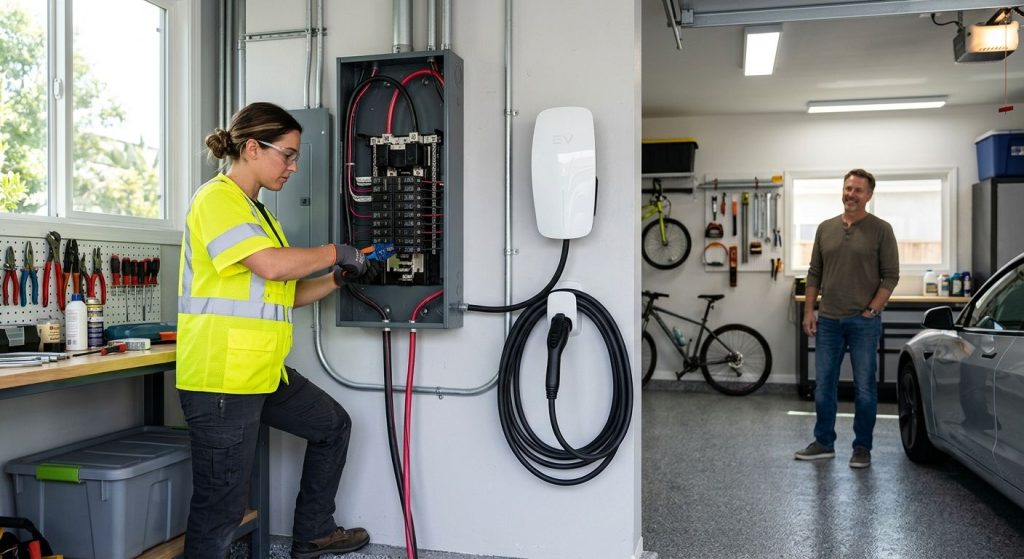
Breakdown of the Standard 200-Amp Panel Upgrade scope for EV charger installations.
The promise of tax credits and rebates in2026 can meaningfully reduce your out-of-pocket spending, but eligibility rules change, so always verify the current terms. This site is a free service to assist homeowners in connecting with local service contractors. All contractors are independent, and this site does not warrant or guarantee any work performed. It is your responsibility to confirm that any hired contractor holds the license and insurance required for the job.
Now that you understand the cost breakdown, the next section walks through the installation process step by step.
Evaluating Your Home’s Electrical Load and Panel Needs
Before installing an EV charger, the most critical safety and feasibility step is a thorough evaluation of your property’s electrical capacity. Modern electric vehicles can draw a continuous load of 30 to 48 amps or more, which often pushes older electrical systems beyond their safe operating limits. For homeowners considering a 200 amp panel upgrade for EV charger cost in Marina del Rey, the journey begins with understanding precisely how much power your home currently demands. This assessment prevents dangerous overloads, ensures code compliance, and determines whether a full service upgrade is necessary or if a more straightforward load management solution will suffice.
Performing a Residential Electrical Load Calculation
A residential electrical load calculation is the definitive method to determine if your panel has the headroom for an EV charger. This process, grounded in methods advocated by the Electrical Safety Foundation International, tallies the total wattage of all electrical loads in the home to ensure the main breaker is not overwhelmed. To perform a basic assessment, a licensed electrician will:
- List the wattage of all major, fixed-in-place appliances, including the HVAC system, electric water heater, clothes dryer, and kitchen range.
- Add the general lighting and receptacle loads, typically calculated at 3 volt-amperes per square foot of living space.
- Factor in the new EV charger’s power draw, often the single largest new load, rated at its continuous charge rate (e.g., a 48-amp charger at 240V represents 11,520 watts).
- Sum these wattages and divide the total by the system voltage (240V) to arrive at the total calculated amperage.
Crucially, this total must then be compared to the panel’s rating, with a key safety rule in mind. The National Electrical Code requires that continuous loads, such as an EV charger running for several hours, must not exceed 80% of a circuit’s or panel’s rated capacity. On a 100-amp service, the total continuous load must stay under 80 amps, making a dedicated 48-amp EV charger impossible without load management or a main breaker panel replacement cost consideration. If the calculation approaches or exceeds the panel’s safe threshold, the system demands an upgrade.
Deciding Between Panel Upgrade and Load Management
When a load calculation reveals insufficient capacity, homeowners face a choice between installing a new electrical panel and deploying an energy management system. According to Marina del Rey Top Electricians’ service guidelines, a panel upgrade is the definitive remedy, replacing older 100-amp systems with a modern 200-amp service that comfortably handles an EV along with all other household appliances. This path not only resolves the immediate EV charging need but also future-proofs the home for additional electric appliances or a second charger.
However, for some properties where the main service is robust but simply lacks breaker space or a small amount of headroom, a load management device presents a more economical alternative. These smart devices act as a traffic controller, dynamically monitoring total household demand. When the system approaches its peak, the device temporarily pauses EV charging to prevent an overload, automatically resuming when other major loads cycle off. This strategy allows EV charging on existing infrastructure without a full 200 amp panel upgrade for EV charger cost in the budget.
The following comparison outlines the crucial differences between these two strategies:
| Factor | 200-Amp Panel Upgrade | Load Management Device |
|---|---|---|
| Cost Impact | Higher upfront (panel + installation) | Lower upfront, but may need electrician for setup |
| Complexity | Requires new panel or service upgrade | Add-on device, existing panel remains |
| Best For | Home needing more capacity for future expansion | Home with adequate main panel but limited headroom |
| Future-Proofing | Supports multiple EVs and additional loads | May limit future additions without panel upgrade |
A 200-amppanel upgrade fundamentally redefines a home’s electrical backbone, making it the preferred choice for long-term capacity and simplifying future projects. A load management system, in contrast, is a targeted, intelligent solution for a single, well-defined constraint but may not support the addition of another high-power appliance down the line.
Next Steps After Evaluation
Once the evaluation is complete, the path forward demands the expertise of a qualified professional. The load calculation is a blueprint, but a licensed electrician must inspect the physical condition of the electrical panel, the service entrance cable, and the grounding system to make a final determination. Marina del Rey Top Electricians connects property owners with top-rated local contractors who perform this in-person assessment and develop a scope of work tailored to the home’s specific configuration and the homeowner’s charging needs.
“Request a Quote Now” through the platorm, and an independent electrician will provide a free, no-obligation custom quote for the recommended work. Before any project commences, it is the sole responsibility of the property owner to perform final due diligence by verifying the chosen contractor’s credentials. Always confirm the contractor’s license through the California Contractor License Board before scheduling work, and ensure they hold current general liability and worker’s compensation insurance. Thisfree service connects you with local experts, but all contracted jobs are between you and the independent, insured electrician you select.
Navigating Permits, Incentives, and Contractor Selection
Upgrading a home’s electrical infrastructure is a significant step in preparing for an electric vehicle. While the benefits of a 200 amp panel upgrade for EV charger cost considerations are clear, the path to completion involves navigating local regulations and identifying qualified professionals. A methodical approach ensures the project is completed safely, legally, and to the highest standard.
A permit from the local building department is typically required for a panel upgrade. This process ensures the work is inspected and compliant with current safety codes, protecting the property from potential hazards. Failure to secure a permit can lead to significant fines, complications with home insurance, and safety risks. For guidance on identifying these hazards, homeowners can refer to the Electrical Safety Foundation for safety guidelines.
Before any work begins, it is critical to verify a contractor’s credentials. The California Contractor License Board (CSLB) is the authoritative government source for confirming a professional license is active and in good standing. Homeowners should also request proof of insurance, including liability and workers’ compensation, to protect their own interests during the project.
Exploring Incentives and Selecting a Qualified Contractor
Beyond the immediate project, financial incentives can help offset the investment in a 200-amp service upgrade. Homeowners are advised to check their eligibility for federal tax credits under the Inflation Reduction Act, or rebates offered through California programs like the Self-Generation Incentive Program (SGIP). Utility providers such as Southern California Edison may also have specific programs for electrical panel upgrades for EV charging, though availability varies.
When vetting potential electricians, a methodical selection process is essential to ensure quality and reliability. The following steps provide a practical checklist for homeowners:
- Verify an active license and insurance policy through the CSLB and direct inquiry.
- Solicit at least three quotes to compare scopes of work, project timelines, and warranty terms.
- Ask for details about the electrician’s specific experience with main breaker panel replacement cost factors and their process for managing local permit applications.
A professional contractor will always begin with a detailed residential electrical load calculation. This essential analysis determines the exact amperage a home demands, accounting for new EV charging equipment and all existing appliances. This step not only ensures the new 200-amp panel is adequate but also prevents overloading the system, which could create a serious safety hazard. Since property-specific requirements make standardized pricing impossible, this assessment is the only way to receive an accurate, custom-quoted scope of work. For a personalized evaluation, homeowners can connect with Marina del Rey’s Trusted Local Electricians to Request Quote Now.
Navigating the intricacies of permits and contractor selection is a critical phase that sets the foundation for a successful installation. All contractors are independent, and it is the homeowner’s responsibility to verify the necessary license and insurance for the work. By prioritizing due diligence, homeowners can confidently move forward with the next phase of their electrification project.
Frequently Asked Questions About Panel Upgrades for EV Chargers
Many homeowners have additional questions about panel upgrades for EV chargers. The following answers from Marina del Rey Top Electricians address the most common concerns.
Do I need a 200 amp panel upgrade to charge an electric car?
A 200 amp panel upgrade for an EV charger cost in Marina del Rey is typically necessary when the existing service is 100 amps or less. A residential electrical load calculation is required to determine if an upgrade is needed before EV charger installation. This assessment confirms whether the home’s current service can safely support the added demand of a Level 2 charger.
What is the difference between a main breaker panel replacement and a sub-panel?
A main breaker panel replacement upgrades the entire home’s electrical service, while a sub-panel adds capacity to a specific area. For EV charging, a sub-panel may suffice if the main panel has adequate capacity. The main breaker panel replacement cost is higher but provides whole-home electrical modernization.
How long does a panel upgrade take and will I lose power?
A panel upgrade usuallytakes 4– 8 hours and requireshe utility to shut off power temporarily. Homeowners should plan for an outage during this period. Only a licensed electrician should perform panel upgrades for safety and code compliance.
For a detailed assessment and custom quote in Marina del Rey, Santa Monica, or Manhattan Beach, contact Marina del Rey Top Electricians. This site is a free service to assist homeowners in connecting with local service contractors. All contractors are independent, and this site does not warrant or guarantee any work performed. }
Planning Your EV Charger Installation with Confidence
Before scheduling installation, homeowners in Marina del Rey should understand the electrical demands of a Level 2 EV charger. A key consideration is the 200 amp panel upgrade for ev charger cost and overall feasibility, which varies by home. Taking the time to assess your current electrical system helps avoid unexpected delays and ensures the project proceeds smoothly.
A residential electrical load calculation is the most reliable method for determining whether an existing panel can handle the added demand. An electrician will evaluate all major appliances and circuits to see if the panel’s capacity is already near its limit. In many cases, a main breaker panel replacement cost becomes a necessary factor when the current panel is outdated or undersized for modern needs. Upgrading to a 200-amp panel is often required to safely support a new EV charger and other household loads.
Because every home’s wiring and panel condition differ, a custom assessment is essential. Marina del Rey Top Electricians can connect residents with a licensed professional who will perform the load calculation and explain all options, from a panel upgrade to a full replacement. Homeowners should always verify that the electrician obtains the required local permits for work in Marina del Rey and throughout Los Angeles County. To get a personalized plan and clear estimates for your property, reach out through the Request Quote Now flow.