
Table of Contents
- The Risks of Federal Pacific Electrical Panels
- Understanding the Fire Hazard of Federal Pacific Panels
- How to Identify a Federal Pacific Electrical Panel
- Are Federal Pacific Panels Dangerous Even When Working?
- Immediate Steps for Federal Pacific Panel Replacement
- Why Professional Replacement Is Necessary for Federal Pacific Panels
- Safeguarding Your Home from Electrical Panel Hazards
The Risks of Federal Pacific Electrical Panels
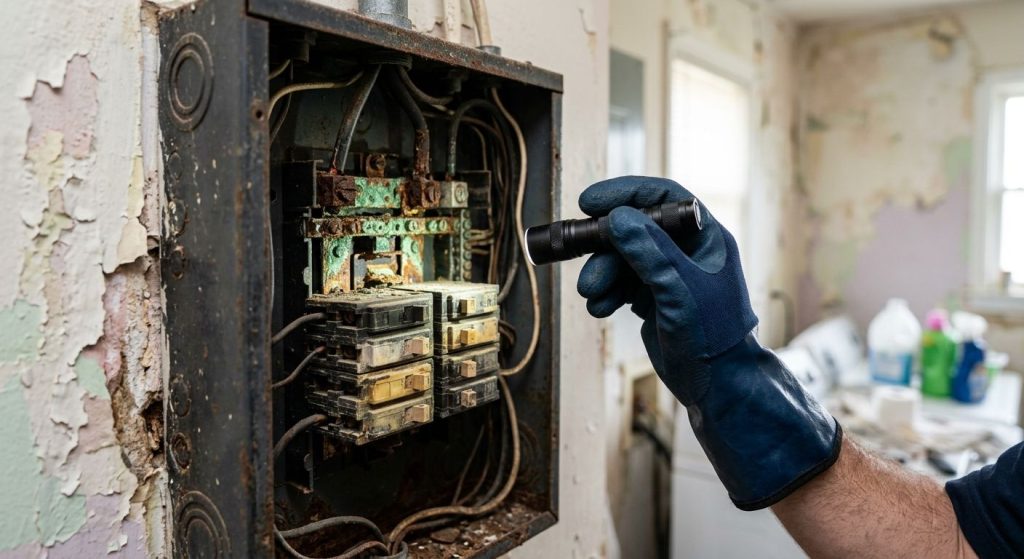
The well-documented failure of Federal Pacific breakers to trip during overloads becomes especially dangerous in coastal climates. In Marina del Rey, where salt air accelerates metal degradation, federal pacific electrical panel hazards are magnified by the inevitable corrosion of internal components. Unlike modern panels with protective coatings, Federal Pacific’s aluminum bus bars and uncoated connections are highly vulnerable. According to Marina del Rey Top Electricians, visible warning signs include discoloration on breaker faces, rust on bus bars, burn marks around breaker slots, and an acrid smell near the panel.
This corrosion can compromise the already unreliable trip mechanism, preventing breakers from opening during a circuit fault and creating a serious fire hazard. Pitting and arcing on corroded bus bars often cause overheating, which may produce the acrid odor many homeowners report. The National Electrical Code requires panels to be located in dry locations, but many older installations in Marina del Rey leave panels exposed to humid, salty air. Common electrical issues in coastal homes like wire degradation and grounding problems further compound these risks. Only a licensed electrician can confirm the extent of corrosion through a thorough visual inspection. Once corrosion is identified, the next step is evaluating whether replacement is the safest course of action.
Understanding the Fire Hazard of Federal Pacific Panels
Among the most hazardous electrical panel types found in older homes is the Federal Pacific Stab-Lok panel. These panels, installed extensively from the 1950s through the 1980s, are now associated with serious federal pacific electrical panel hazards that every homeowner should understand. In many homes across Marina del Rey and surrounding Los Angeles communities, these outdated panels remain hidden fire hazards, posing a threat to property and life.
At the core of the safety risks of Federal Pacific electrical panels is a design flaw in the circuit breakers. Unlike modern breakers that reliably trip when overloaded, Federal Pacific breakers often weld shut or fail to interrupt current, allowing wires to overheat. This can lead to insulation breakdown and, in severe cases, electrical fires. Even when a breaker appears to reset normally, it may no longer provide adequate overload protection, leaving circuits in a permanently hazardous state. Because the breakers look functional from the outside, property owners may not realize a danger exists until symptoms develop.
Persistent flickering lights are one warning sign that should never be ignored. As noted by Marina del Rey Top Electricians, flickering lights throughout the house often signal a loose neutral wire in the electrical panel, a condition that can lead to dangerous voltage imbalances and fire. If you notice flickering lights in house troubleshooting, it could point to a loose neutral connection or a failing Federal Pacific breaker, both of which are fire hazards. Additional warning signs include:
- Discolored or warm outlets
- A persistent burning smell near the electrical panel
- Breakers that feel hot to the touch
- Lights that dim when a major appliance cycles on
Any combination of these symptoms warrants immediate attention from a licensed electrician. Attempting to open or inspect a Federal Pacific panel without proper training is extremely dangerous. Only a qualified professional can safely diagnose the condition of the breakers and the integrity of the panel’s wiring.
If your home was built before 1990 and still has its original electrical panel, it could be a Federal Pacific model. Scheduling a professional evaluation is the critical first step before considering replacement. Contact Marina del Rey’s Trusted Local Electricians to connect with a licensed electrician who can perform a thorough safety inspection. Request a quote to take the first step toward safeguarding your home against electrical fire hazards.
How to Identify a Federal Pacific Electrical Panel
After learning about federal pacific electrical panel hazards, you’re probably eager to determine whether your home has one of these outdated panels. Identifying a Federal Pacific electrical panel is a straightforward visual process that any homeowner can perform.
Begin by checking the panel’s door or the inside cover label. The easiest identification is the brand name “Federal Pacific Electric” or simply “Federal Pacific” printed on the sticker. Older labels may be faded, but the name is usually still legible.
Next, examine the circuit breakers themselves. Federal Pacific used a proprietary design called Stab-Lok, which is stamped on the switch face. These breakers often have a distinctive bright red or dark gray casing and a visible metal stab clip that locks into the bus bar. On the rating sticker inside the panel door, look for model numbers that begin with “FPE” or include “Federal Pacific.”
Keep an eye out for these identification clues:
- Look for “Federal Pacific Electric” or “Federal Pacific” on the panel door or interior label.
- Inspect the circuit breakers for Stab-Lok branding and bright red or dark gray casings.
- Check the rating sticker for model prefixes like “FPE” or “Federal Pacific.”
- Consider the home’s construction date; panels installed between the 1950s and early 1980s may be Federal Pacific.
If you see any combination of these clues, your panel is very likely a Federal Pacific model.

Five-step process to identify Federal Pacific electrical panels at home.
However, visual clues alone aren’t enough—safety concerns mean any suspected Federal Pacific panel should be evaluated by a licensed electrician. Some older Federal Pacific load centers also lack a main breaker, a detail that can confirm the panel’s vintage and may indicate outdated safety features. A professional can verify the panel type and assess whether it poses an immediate risk.
Once you have a confirmed identification, the next article in this series covers replacement options and electrical panel upgrades to bring your home up to current code. As part of a overall safety strategy, ensuring your home has proper GFCI outlet installation in wet areas adds protection against shock hazards.
Are Federal Pacific Panels Dangerous Even When Working?
For homeowners in Marina del Rey, the notion that a functional electrical panel is safe can be misleading. Federal Pacific panels carry well-documented federal pacific electrical panel hazards that persist even when no overt issues arise. These hazards stem from design flaws in breakers installed from the 1950s through the 1980s. A panel that seems reliable now may not protect a home during a serious electrical fault, making proactive replacement a critical safety consideration.
Why Federal Pacific Panels Are Dangerous
The primary danger centers on the Stab-Lok circuit breakers used in Federal Pacific panels. Independent testing has repeatedly shown that these breakers often fail to trip under overload or short-circuit conditions, the very events they are designed to interrupt. A breaker that fails to shut off current allows wires to overheat, posing a fire risk long before any visible sign of trouble appears. Even breakers that have never been stressed may jam when manually turned off, further eroding their reliability. For families living with these panels, the hazard is not about daily performance but about the absence of guaranteed protection when it is needed most.
Warning Signs Homeowners Should Not Ignore
While a Federal Pacific panel may appear stable, subtle symptoms can hint at ongoing danger. Flickering or dimming lights, especially when appliances like air conditioners or refrigerators start, often indicate an overloaded circuit or a loose connection. According to Marina del Rey Top Electricians, lights that dim and brighten randomly can signal underlying panel issues. Other signs include buzzing or humming noises from the panel, warm circuit breaker switches, and any burning odor near the electrical enclosure. If a home has a Federal Pacific panel and any of these symptoms emerge, a professional inspection should be scheduled without delay.
Given these latent risks, homeowners in Marina del Rey should not wait for physical signs to take action. Periodic electrical safety inspections are essential for any home, but they become urgent when a known hazard like a Federal Pacific panel is present. Rather than trusting an aging panel to deliver safe operation, homeowners can use Request Quote Now to connect with a top-rated, independent electrician who can evaluate the system and recommend next steps. The following section outlines what panel replacement involves, helping homeowners make an informed decision about this important safety upgrade.
Immediate Steps for Federal Pacific Panel Replacement
The dangers of federal pacific electrical panel hazards are well-documented, with the Indiana State Government warning that these outdated units are linked to house fires and electrical shock. A Federal Pacific panel in a home is not just an operational nuisance; it represents a proven safety threat that demands swift action. These hazardous Federal Pacific panels require immediate attention to prevent potential tragedies.
Authoritative safety information from the Indiana State Government cautions that Federal Pacific Stab-Lok breakers often fail to trip during electrical overloads, leaving circuits energized and creating a persistent fire risk. Independent industry reports have confirmed that a significant percentage of these breakers do not meet modern safety standards. Given the severity of these FP panel dangers, homeowners should not delay in addressing the problem.
To safeguard the property and its occupants, the following immediate steps should be taken:
- Check for visible warning signs such as scorch marks, discoloration, or a burning smell near the panel; if any are present, shut off the main breaker and keep it off.
- Refrain from attempting any DIY repairs or breaker replacements — working on a Federal Pacific panel is extremely hazardous and must only be performed by a licensed electrician.
- Schedule an immediate professional inspection to evaluate the panel’s condition and confirm the extent of the risk.
- Consider full panel replacement rather than swapping individual breakers, as the inherent design flaws in FP panel dangers make piecemeal fixes unreliable over time.
- For homeowners in Marina del Rey and surrounding areas, contact a local, qualified electrician for an evaluation and a custom quote to ensure the new installation meets current electrical codes.
After these immediate steps are taken, engaging a qualified professional is the next priority. A licensed electrician can perform a comprehensive load analysis and use thermal imaging to detect hidden hot spots that indicate failing breakers. This diagnostic evaluation confirms the degree of hazard and helps plan the full replacement. Understanding the federal pacific electrical panel hazards helps homeowners prioritize a complete panel replacement over temporary repairs.
Once these immediate safety measures are in place, the next phase involves selecting a trusted professional for the replacement. The following section details the vetting process, what to expect during the upgrade, and how to ensure the work meets all local codes and safety requirements.
Why Professional Replacement Is Necessary for Federal Pacific Panels
Once a Federal Pacific panel is identified, the documented Federal Pacific electrical panel hazards make immediate professional replacement a critical safety priority. These panels, particularly the Stab-Lok design, are known to experience dangerous failures that can lead to overheating, arc faults, and a significantly elevated risk of residential fires.
The Risks of a Federal Pacific Panel
Federal Pacific Stab-Lok breakers have a well-established pattern of failing to trip during overloads or short circuits, allowing excessive current to flow through wiring long after safe limits are exceeded. This can generate extreme heat, degrade insulation, and ultimately ignite surrounding materials. According to Marina del Rey’s Trusted Local Electricians, persistent flickering lights throughout an entire house often signal the serious electrical faults—such as loose service connections or overloaded circuits—that are especially dangerous when combined with the known Stab-Lok hazards.
Beyond the immediate fire threat, Federal Pacific panels do not meet current National Electrical Code (NEC) requirements. Many insurance providers will not cover homes equipped with these outdated systems, leaving homeowners financially exposed in the event of an electrical incident. Only a licensed electrician can verify whether a panel has been compromised and perform the necessary upgrade.
Professional replacement involves far more than swapping out an old panel. A qualified electrician will safely disconnect the hazardous unit, dispose of it in accordance with environmental regulations, install a modern code-compliant panel, and conduct comprehensive load testing to confirm the system operates safely under everyday demands. Attempting this work without proper training and equipment can result in severe injury, property damage, or an incomplete installation that leaves hidden dangers in place.
Homeowners in Marina del Rey, Los Angeles, Santa Monica, Manhattan Beach, and Westchester should have their panels evaluated by a local licensed professional at the first sign of trouble. Symptoms such as whole-home flickering lights, buzzing sounds near the breaker box, or a burning odor demand an immediate response. Requesting a quote now ensures that the hazard is addressed before it escalates into a serious emergency, while also preparing the home for a reliable, code-compliant electrical system.
Safeguarding Your Home from Electrical Panel Hazards
Federal Pacific electrical panel hazards are a serious concern in older homes, as these panels have a history of failing to trip during overloads, increasing the risk of electrical fires. Homeowners in Marina del Rey and Los Angeles County should watch for warning signs such as flickering lights, frequent breaker trips, a burning smell, or discoloration or scorch marks around the panel. Addressing these Federal Pacific panel dangers begins with a professional electrical safety inspection—the critical first step. Modern safety codes, like the GFCI requirement for kitchen countertop outlets during remodels, illustrate the importance of a thorough electrical safety strategy. Many state and local guidelines, such as those referenced by the Indiana State Government Portal, set minimum standards for safe panels. Under no circumstances should homeowners attempt do-it-yourself repairs; always hire a licensed electrician. In many cases, a complete panel replacement or upgrade is recommended to eliminate risks. Marina del Rey Top Electricians connects property owners in Marina del Rey, Santa Monica, and surrounding communities with independent, vetted contractors. Homeowners are responsible for verifying each contractor’s license and insurance, as the site does not warrant or guarantee work performed.