
Table of Contents
- Protecting Your Home and Electronics
- Whole Home Surge Protector Fundamentals
- Evaluating Surge Protection Options for Your Home
- Installation Process and Cost of Surge Protection
- Advanced Considerations for Modern Homes
- Frequently Asked Questions About Whole Home Surge Protection
Protecting Your Home and Electronics
A whole home surge protector, commonly called an electrical panel surge protector, provides the first line of defense against damaging voltage spikes that can enter a property through utility lines. Unlike point-of-use power strips that only safeguard a handful of plugged-in devices, a whole home solution is installed directly at the main electrical panel and serves every circuit in the house simultaneously. Modern appliances, home entertainment systems, and security equipment contain sensitive microprocessors that degrade or fail when exposed to even modest power fluctuations, making panel-level coverage a practical decision for Marina del Rey residences.
According to the Electrical Safety Foundation International, electrical safety surge protection is an essential safeguard for modern homes because a significant portion of damaging surges originate outside the building from lightning strikes and utility grid switching. Relying exclusively on individual outlet protectors leaves permanently wired equipment such as HVAC components, kitchen appliances, and hardwired lighting controls completely exposed. Industry guidelines emphasize that layered defense, combining a panel-mounted surge protective device with point-of-use units for particularly sensitive electronics, delivers the most comprehensive risk reduction for a household.
Proper surge protection device installation requires a licensed electrician who can verify panel compatibility, select the correct protective rating, and confirm compliance with local electrical codes. For expert whole home surge protection in Marina del Rey, residents can rely on Marina del Rey’s Trusted Local Electricians who perform thorough evaluations and provide transparent quotes without any obligation. Homeowners interested in learning more about safeguarding their property are encouraged to Request Quote Now and schedule a no-pressure consultation with a top-rated professional.
Whole Home Surge Protector Fundamentals
For homeowners seeking comprehensive defense for their electrical investments, the function of a whole home surge protector is an essential consideration. Serving as Marina del Rey’s Trusted Local Electricians, we connect property owners with independent professionals who understand that modern homes contain sensitive circuitry in nearly every appliance. A whole home surge protector is installed directly at the main electrical panel, where it monitors incoming voltage and acts as a gatekeeper against destructive spikes from the utility grid. Rather than protecting a single device, this solution diverts excess energy away from the entire electrical infrastructure before it can travel through internal wiring to damage connected equipment. This foundational layer of defense is particularly relevant in coastal communities like Marina del Rey, where environmental factors and grid fluctuations create a higher risk of surge-related damage.
How Whole-Home Surge Protection Works
To grasp how this safety measure functions, think of the electrical panel as the heart of a home’s electrical system. A whole home surge protector is mounted beside or within this central hub, hardwired into the main breaker bus. When a voltage spike—whether from a distant lightning event, a utility switching operation, or a sudden grid fluctuation—travels toward the residence, the device instantly detects the excess energy. According to the Electrical Safety Foundation International, these components utilize sophisticated shunting technology to redirect dangerous over-voltage to the ground wire, effectively bleeding off the surge before it reaches internal circuits. This process protects large hardwired appliances like HVAC compressors, electric ovens, and refrigerators that cannot be shielded by simple plug-in solutions. The entire reaction occurs in microseconds, ensuring that sensitive electronics and major appliances remain unharmed.
Type 1 vs. Type 2 Surge Protectors
Understanding the distinction between the two main categories helps homeowners select the right protection for their specific situation. A Type 1 surge protection device is designed for installation at the service entrance, typically between the utility meter and the main breaker panel. This device handles high-energy surges originating from outside the building, including direct lightning strikes. Installation of a Type 1 unit is always performed by a utility provider or a licensed electrician. In contrast, a Type 2 electrical panel surge protector is mounted directly at the load center, or breaker panel, and primarily guards against internally generated surges or residual external energy that passes beyond the service point. This is the most common solution for existing homes, and the surge protection device installation process for a Type 2 unit is straightforward for a qualified independent contractor, often taking one to two hours if the panel has adequate capacity. Both types can work in tandem to provide layered defense, but a Type 2 device is the practical standard for retrofitting a residential load center.
Whole Home Surge Protector vs. Power Strip
A common misconception is that a single point-of-use device provides all the defense a modern home needs. A power strip with surge suppression guards only the devices plugged directly into it, offering localized defense against moderate spikes traveling through a specific outlet. This is useful for protecting a home office setup or an entertainment center from a nearby lightning strike or a voltage oscillation from a vacuum cleaner. However, it leaves major appliances and the home’s internal wiring completely exposed to larger grid-wide events. The benefit of a whole home surge protector is its ability to block high-voltage surges from entering the home’s wiring at the panel level, shielding your furnace, oven, and built-in lighting. While a whole-house unit provides robust structural defense, it is important to note that surges can also originate from within the home—such as when a large motor cycles on—and a remote power strip still offers a valuable secondary layer. A whole-house solution reduces the risk of damage, but sensitive electronics benefit from this dual-layer strategy. All trademarks belong to their respective owners, and you can find the full trademark notice Marina del Rey electricians on our site—this is a free service to connect homeowners with independent local contractors.
Evaluating Surge Protection Options for Your Home
Comparing Leading Surge Protector Brands
Comparing leading surge protector brands helps homeowners weigh surge capacity, response time, warranty coverage, and smart-home readiness when selecting a whole home surge protector. When evaluating options, consider three technical metrics first: nominal surge capacity (measured in kiloamperes), clamping/re-sponse time, and the type of monitoring or remote alerts offered. Manufacturers such as Siemens, Leviton, Eaton, and Square D offer varying capacities and warranty terms; compare published kA ratings and whether the unit provides status indicators or Wi‑Fi integration. Warranty lengths and coverage conditions differ by model and manufacturer—present these as manufacturer-stated terms rather than endorsements. Installation should be performed by a licensed electrician; homeowners are advised to verify contractor credentials, insurance, and permit handling before proceeding. Also consider whether an existing electrical panel has adequate space or requires an electrical panel upgrade prior to mounting a device. When evaluating options, consider total lifecycle support and replacement policies as well as compatibility with existing surge suppression strategies such as point‑of‑use protectors. The table below summarizes key specification categories to guide selection and to prompt questions for contractors.
| Brand | Surge Capacity (kA) | Response Time | Warranty | Smart Home Compatible | Installed Cost Range |
|---|---|---|---|---|---|
| Eaton | 36kA – 108kA | < 1 Nanosecond | Limited Lifetime | Yes (Select models) | $400 – $700 |
| Siemens | 60kA – 100kA | < 1 Nanosecond | 10-Year | No | $350 – $600 |
| Leviton | 50kA – 100kA | < 5 Nanoseconds | Lifetime Limited | Yes (Status Alerts) | $450 – $800 |
| Square D | 50kA – 120kA | < 1 Nanosecond | 5-Year Limited | No | $400 – $750 |
Coastal Home Considerations
For homes in coastal areas such as Palos Verdes and in Marina del Rey, environmental conditions amplify surge risk and influence equipment selection. Salt-laden air accelerates corrosion of exposed metal connections and can reduce the effective life of surge suppression components, while higher local lightning frequency and periodic grid instability during storms increase the likelihood of transient voltage events. These factors argue for a panel‑level solution rather than reliance solely on point‑of‑use strips; an electrical panel surge protector mounted at the service entrance provides broad circuit protection and diverts large transients before they reach branch circuits. Homeowners should also consider enclosure corrosion ratings, maintenance intervals, and whether the model includes remote status indicators that reduce inspection time. Permitting and code compliance in Los Angeles County are important—licensed contractors typically handle required permits and inspections. Homeowners concerned about local conditions should consult electricians in Marina del Rey and take into account Marina del Rey’s Trusted Local Electricians when requesting assessments. As with any hire, verify licensing, insurance, and contractor references before authorizing work. Ask about maintenance plans.
Appliances Most Vulnerable to Surges
Large appliances and sensitive electronics vary in their exposure to damaging transients; identifying the most vulnerable items helps prioritize protection. Refrigerators and smart appliances can suffer control board failures when voltage spikes occur, while HVAC systems include motors and electronic controls whose replacement is costly and disruptive. Home theater systems and networked entertainment gear are sensitive to even modest surges that degrade components over time, and electric vehicle chargers contain power electronics that can be damaged by upstream disturbances. A whole home surge protector at the service entrance reduces the risk to all branch circuits by diverting high-energy transients before they flow through wiring to these endpoints. For point-specific protection, combine panel-level devices with quality point-of-use surge suppressors on critical equipment, and status monitoring features. When planning surge protection device installation, expect the contractor to assess panel capacity, coordinate permits if needed, and confirm compatibility with any existing subpanels or EV charger wiring. Document manufacturer warranty provisions and discuss maintenance expectations with the installer. Once you have selected a surge protector, professional installation ensures optimal performance.
Installation Process and Cost of Surge Protection
Understanding the benefits, the next step is to review the installation process and associated costs. Installing a whole home surge protector requires professional expertise to ensure the system functions correctly and meets local electrical codes in Marina del Rey. This section breaks down the investment, walks through the installation in Marin del Rey step-by-step, and addresses why hiring a licensed electrician is non-negotiable. It also provides a decision framework to help homeowners evaluate whether this protection is the right move for their property.
Cost Breakdown for Installation
The total investment for a whole home surge protector involves several components beyond the device itself. A quality Type 2 SPD, such as those from Siemens, Eaton, or Leviton, typically has an approximate device cost ranging from $200 to $600, depending on the model’s joule rating and features. Labor for a licensed electrician to install an electrical panel surge protector generally falls between $150 and $400. This cost varies based on whether the installation involves a main breaker panel or a sub-panel and the overall complexity of the wiring. Permit fees in Marina del Rey are typically in the $50 to $150 range, and the electrician handling the project will usually manage these filings. If the existing electrical panel lacks an available double-pole breaker slot, a panel upgrade becomes necessary, adding an approximate cost of $800 to $2,000 to the project. All pricing is approximate and subject to a custom quote based on the specific conditions of the home.
| Cost Component | Typical Range | Notes |
|---|---|---|
| SPD Device (Type 2) | $200 – $600 | Price depends on joule rating and brand |
| Electrical Labor | $150 – $400 | Based on 1-2 hours of standard labor |
| Permits & Fees | $50 – $150 | Varies by local municipality |
| Panel Upgrade (Optional) | $800 – $2,000 | Only required if panel space is insufficient |
Residents in coastal locations like Marina del Rey face higher risks of surge damage due to frequent power fluctuations during storms, according to local service research. This makes understanding the full cost picture important for budgeting. While the device cost is relatively modest, the true value lies in the professional installation that ensures the entire system operates safely.
The Installation Process Step-by-Step
Installing a surge protection device installation follows a clear, six-step sequence that a qualified electrician completes in about one to two hours for a standard residential panel.
The process begins with an initial electrical assessment. The electrician inspects the main electrical panel to confirm capacity and check for any pre-existing code violations that need correction. Next, they shut off the main breaker to de-energize the panel entirely, a critical safety step that eliminates shock hazards. The third step involves mounting the surge protective device as close to the panel as possible, often using a knockout on the side or bottom, to minimize lead length and improve performance. With the device secured, the electrician connects the wiring by landing the conductors on a dedicated double-pole breaker and attaching the neutral and ground wires to their respective bus bars. After restoring power, the fifth step is to test the unit using the manufacturer’s indicator lights or diagnostic display to confirm proper operation. Finally, a comprehensive safety inspection ensures all connections are tight, the cover is replaced, and the installation meets local Los Angeles County code requirements.

Complete surge protector installation workflow in six steps
This systematic approach ensures the whole home surge protector integrates seamlessly with the existing electrical system. The entire workflow is designed to minimize risk while maximizing the protective capabilities of the device.
Why Professional Installation Matters
Professional installation of a whole home surge protector is not simply a recommendation; it is a necessity for code compliance, safety, and warranty protection. The National Electrical Code (NEC) Article 285 governs the installation of surge protective devices, and a licensed electrician understands these requirements, including proper conductor length restrictions and overcurrent protection rules. Attempting a DIY installation on a live electrical panel carries severe shock and fire hazards, and an improperly wired device may fail to divert surges effectively, leaving the home exposed.
Beyond safety, most major manufacturers require installation by a licensed electrician to keep the product warranty valid. Without proof of professional installation, a homeowner may be unable to claim a replacement if the unit fails after a major surge event. Professional electricians also handle the permit process for installations in Marina del Rey, ensuring the work is inspected by the local authority having jurisdiction, which adds an extra layer of verification. A licensed electrician can help you determine the best placement and the right specifications for your specific electrical system.
Decision Framework: Is Whole-Home Surge Protection Right for You?
Determining whether to invest in a whole home surge protector depends on several key factors about the property and the value of its electrical assets. Homeowners can use the following framework to guide their decision.
If the home is older than 20 years, the electrical infrastructure may be more vulnerable to surge-related degradation, and upgrading to modern protection is a proactive step. Households with valuable electronics, such as a dedicated home office, a high-end home theater system, or a network of smart home devices, stand to protect investments that far exceed the cost of the installation. The risk profile also increases for properties in coastal areas, where lightning strikes and grid instability during seasonal storms are more common. These conditions can introduce damaging transients onto power lines without warning.
In many cases, the aggregate value of the electronics and appliances connected to the home’s circuits justifies the approximate installation costs outlined above. When comparing the price of a comprehensive surge protection device installation to replacing a single damaged appliance or a suite of smart home controllers, the economics strongly favor proactive defense. Once installed, your system requires minimal maintenance—learn more about how to keep your protection effective.
Advanced Considerations for Modern Homes
For homeowners seeking the highest level of electrical protection, particularly those with sophisticated smart home technology, a whole home surge protector provides a critical safeguard. Unlike basic power strips that only defend individual outlets, this device is installed at the main electrical panel to shield every circuit against damaging voltage spikes. Modern residences increasingly rely on interconnected systems that are exceptionally sensitive to power fluctuations, making panel-level protection a prudent investment for long-term safety and equipment longevity.
Whole-Home Surge Protection for Smart Homes
Advanced smart homes integrate numerous automated components—from voice-activated assistants and lighting controllers to security cameras and entertainment hubs—all of which share a common vulnerability to electrical surges. Because these systems often communicate on delicate circuit boards, even a minor transient voltage can corrupt data or cause premature failure. A whole home surge protector forms the first line of defense by diverting excess energy away from the main panel before it ever reaches the connected hubs and controllers. While point-of-use protectors offer supplementary coverage, surge protection device installation at the service entrance remains the most comprehensive way to safeguard a fully integrated home network. Homeowners are advised to consult top-rated electricians who understand the specific power demands of automated environments.
Pairing Surge Protection with Panel Upgrades
Many older homes require an electrical panel upgrade to accommodate the added load of modern appliances and electronics. An electrical panel surge protector is often installed during this same upgrade, creating a seamless opportunity to reinforce the entire system. For instance, upgrading from a legacy 100-amp panel to a modern 200-amp capacity in Marina del Rey allows the technician to integrate whole-home protection while also boosting the property’s ability to support electric vehicles, induction cooktops, and high-efficiency HVAC units. Pairing these two services not only simplifies the labor but also ensures that an aging electrical infrastructure does not become a bottleneck for new technology. Marina del Rey Top Electricians connects local residents with experienced professionals who can evaluate whether a concurrent upgrade and surge suppression installation is the most efficient path to whole-home safety.
Maintenance and Longevity of Surge Protectors
A whole home surge protector is a long-term investment that requires minimal but consistent attention to remain effective. Homeowners should perform an annual visual inspection of the unit’s indicator lights—typically, a steady green status light confirms functional protection, while a red fault light signals that the protective components have been compromised and immediate replacement is necessary. It is equally important to schedule a professional inspection after a severe electrical storm or an unexpected power outage, as these events can degrade internal suppression components without triggering a visible alarm. Most manufacturers recommend replacement every five to ten years, though the specific lifespan depends on local surge activity and the frequency of transient events. Before engaging any service, property owners are encouraged to verify the contractor’s active license through the California Contractors State License Board to confirm they meet all regulatory requirements.
For a personalized evaluation of your protection needs, contact Marina del Rey’s Trusted Local Electricians to discuss whole-home safety options and request a quote.
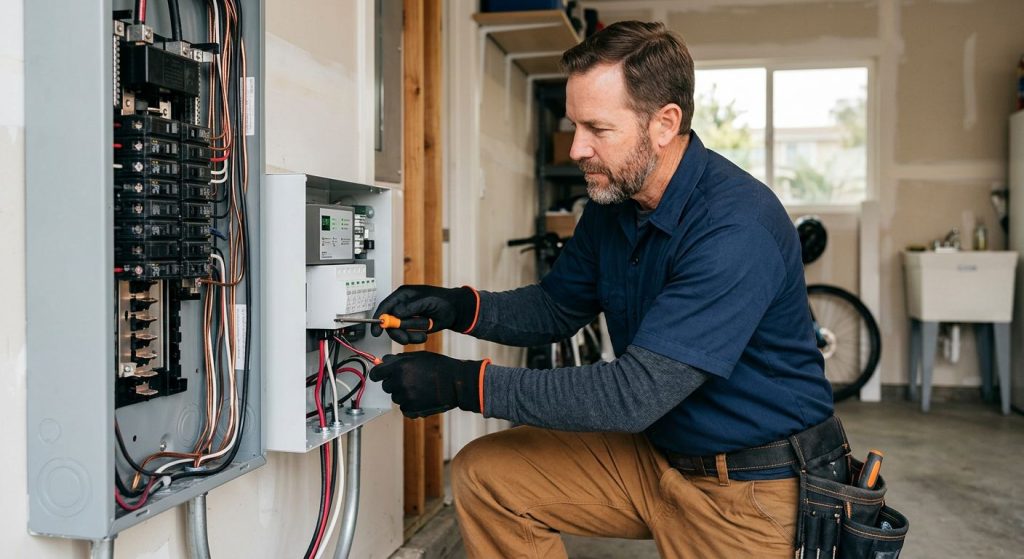
All persons depicted in a photo or video are actors or models and not contractors listed on this site.
Frequently Asked Questions About Whole Home Surge Protection
Here are answers to common questions about whole home surge protection.
What is whole home surge protection?
A whole home surge protector is a device installed at the main electrical panel to defend all household circuits from voltage spikes. Unlike basic power strips, an electrical panel surge protector shields appliances, electronics, and hardwired systems throughout the entire property.
How does it compare to power strips?
A standard power strip protects only the devices plugged directly into it. A whole house surge protection solution operates at the service entrance, intercepting surges caused by lightning strikes and utility grid fluctuations before they reach internal wiring.
Who installs surge protection devices?
A surge protection device installation must be performed by a licensed electrician. The process involves assessing the existing panel, mounting the suppressor, and ensuring compliance with local code, typically completed in one to two hours for a standard residential setup.
What does whole home surge protection cost?
Pricing depends on the home’s electrical system and the specific installation requirements. Homeowners should request a custom quote to receive an accurate estimate based on their panel configuration and local permitting needs.
Is surge protection worth it?
According to the Electrical Safety Foundation International, surge protection helps prevent damage to sensitive electronics from lightning strikes or utility grid fluctuations. For coastal properties in Marina del Rey, where storm-related power fluctuations are frequent, a properly installed surge suppressor offers meaningful long-term defense.
Resources
- Get Whole-Home Surge Protection in Marina del Rey
- Understand the Legal Disclaimer for Marina del Rey Electricians
- Explore Comprehensive Electrical Services in Marina del Rey
- Discover Top Electrical Services in Marina del Rey
- Get Expert Whole-Home Rewiring in Marina del Rey
- Call an Emergency Electrician in Marina del Rey Today
- Find Top-Rated Electricians Near You in Marina del Rey
- Learn About Electrical Safety and Surge Protection
- Find California Contractor License Verification Tools